







Search Results for: manual draw

An influencer coffee shop was penalized for using imported coffee beans of no lawful origin, drawing attention to food compliance issues in the coffee industry.
Recently, the Market Supervision Bureau of Yuecheng District, Shaoxing City, investigated and penalized a popular coffee shop. The shop was found using imported coffee beans without Chinese labels and could not provide proof of legal origin. It was also involved in selling coffee equipment without Chinese labels. Ultimately, it was fined 25,000 yuan and the related products were confiscated. This case reveals a common compliance risk in the procurement and use of coffee beans by specialty coffee shops: whether self-roasting or external procurement, coffee bean raw materials require corresponding food business or production licenses and product qualification inspection reports. As market supervision intensifies, coffee operators urgently need to self-check risks to ensure legal and compliant operations. [more…]
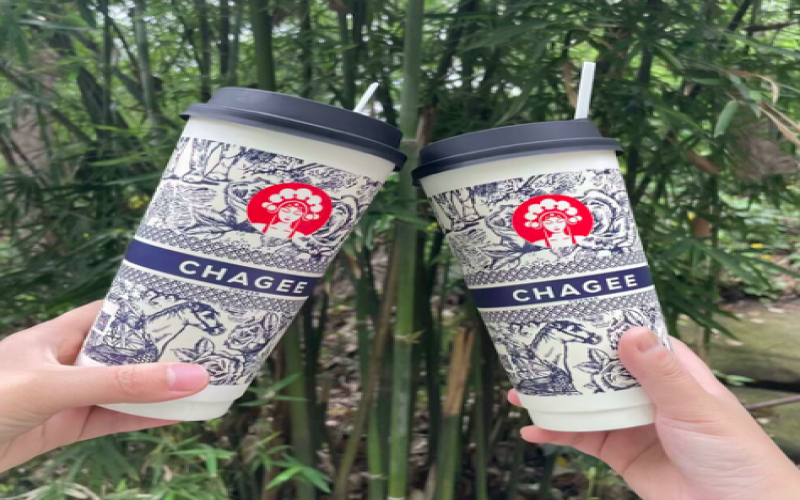
CHAGEE's lottery mechanism questioned: user wins four times in one month, fairness under scrutiny
Recently, netizens discovered that in a lucky draw event run by the official Chongqing account of Chagee, the same user won four times within a single month, sparking widespread skepticism. Because the account's lucky draw did not use the platform's built-in system tool but was instead manually selected by operations staff, many netizens suspected "black box manipulation" in the event. Although the questioned winner came forward to clarify that they simply participated frequently and had good luck, the explanation only deepened public suspicion. As of press time, Chagee's official side has yet to make any response to the matter. [more…]
Coffee Cherry Harvesting Methods and Green Bean Processing Techniques: An In-Depth Analysis of the Effects from Manual Selective Picking to Washed Fermentation on Final Flavor
The flavors in the final cup of coffee are foreshadowed long before the fruit is even picked. The picking method determines the ripeness and uniformity of the fruit, while the subsequent green coffee processing further shapes the trajectory of acidity, sweetness, and cleanliness. This article will systematically sort out the applicable scenarios and pros and cons of mechanical picking versus manual picking, and take a deeper look at how the two mainstream processing paths—the dry method (non-washed) and the washed method (wet processing)—actually affect coffee quality. Whether you are a beginner just getting into specialty coffee or a processing-method enthusiast hoping to refine your understanding, you can gain a clear understanding of this key stage from fruit to green coffee. At the end, we also draw on Front Street Coffee's product practices to explain the specific differences in how different processing methods present flavor. [more…]
A Discussion on Brewing Equipment Selection for Front Street Blue Mountain Coffee and Its Suitability for Moka Pots and Espresso Machines
Front Street Blue Mountain Coffee is a high-quality Arabica bean with a medium-light roast, so what brewing methods suit it? Starting from the quality of the green beans, this article shares personal views on equipment for making Blue Mountain Coffee. Drawing on the experience of roasting National Day gifts for the Jamaican Embassy, the author mentions that Mr. Patrick, an official from the Jamaica Industrial Commission, recommended the French press, and discusses the applicability of various methods such as manual brewing, siphon, and electric drip. At the same time, regarding whether a moka pot or an espresso machine can make Front Street Blue Mountain Coffee, the author also gives practical advice: adapt to pressure extraction by coarsening the grind. The full text emphasizes that there is no need to obsess over how professional or high-end the equipment is, and that one should instead focus on the unique flavor brought by the coffee beans themselves. [more…]
The Complete Clever Cup Operation Guide: Extraction Principles, Parameter Settings, and a Detailed Lazy-Brewing Workflow
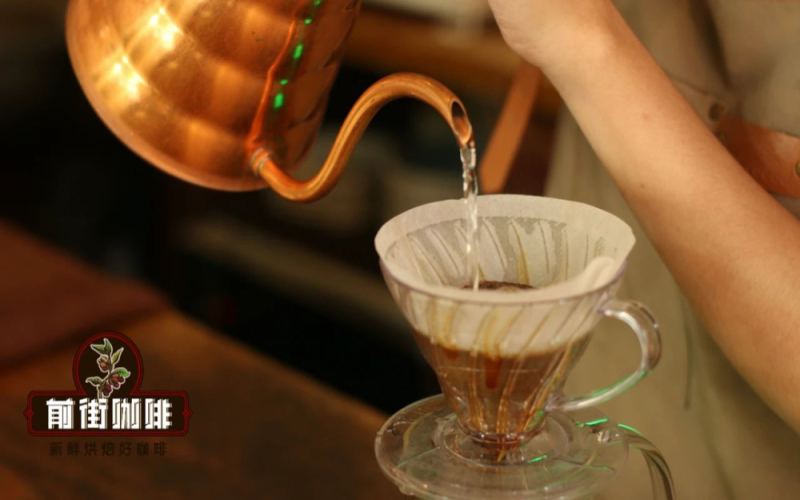
Among the many pour-over coffee devices, the Clever Dripper has become an ideal choice for beginners thanks to its dual extraction method of immersion and filtration. Drawing on Front Street's practical experience, this article systematically explains the Clever Dripper's working mechanism, approach to parameter configuration, and specific brewing steps. It covers how key variables such as water temperature, coffee-to-water ratio, grind size, and immersion time affect flavor, and uses Ethiopian Huakui coffee beans as an example to provide a complete operating plan with 15 grams of coffee, a 1:16 ratio, and a water temperature of 94°C, helping coffee lovers easily make a cup of immersion-brewed coffee with high clarity and rounded sweetness. [more…]

Manual or Electric Coffee Grinder: How to Choose? A Full Analysis of Flat Burr, Conical Burr, and Ghost Tooth Burr Differences
Faced with the dazzling array of coffee grinders on the market—ranging from a few dozen yuan to tens of thousands, from hand grinders to electric ones, from flat burrs to ghost teeth—beginners often don't know where to start. Drawing on years of experience running a shop, Front Street Coffee systematically sorts out the approach to choosing a grinder from three angles: power source, price tier, and burr type. The article will explain the scenarios each of hand grinders and electric grinders suits, analyze which type of machine should be prioritized under different budgets, and explain the differences between flat burrs, conical burrs, and ghost teeth in terms of grinding method and particle shape, as well as how these differences affect extraction flavor. Whether you're a student just getting started, a traveling coffee enthusiast, or a home user preparing to upgrade your equipment, you'll be able to find a direction that suits you. [more…]

A Complete Analysis of Manual Brew Mandheling Parameters: Flavor Differences Between Lintong and Golden Mandheling and Extraction Techniques
Mandheling coffee is known for its low acidity, full body, and solid bitterness, but if brewed improperly, it can easily become an over-extracted cup of bitter "herbal tea." This article starts with two Indonesian Mandhelings on Front Street Coffee's bean list—Lintong Mandheling and PWN Golden Mandheling—comparing their respective flavor profiles, and around pour-over practice, breaks down in detail the key parameters including water temperature, coffee-to-water ratio, grind size, dripper selection, and the three-pour pouring technique. Whether you are a beginner just getting into dark-roasted beans or a seasoned player hoping to bring out layers in Mandheling, you can find reusable brewing approaches here to release the aroma and sweetness of Mandheling more fully. [more…]

An Analysis of the Mechanism, Timing, and Practical Key Points of the Bloom in Pour-Over Coffee
Blooming is a frequently mentioned yet easily misunderstood step in coffee extraction. Starting with the pre-infusion design of segmented water-feed coffee machines, this article explains the principle by which blooming enhances extraction and locks in aroma, while pointing out that manually imitating blooming on household machines without a segmented function actually causes a loss of the essence. The article further introduces blooming methods for various devices such as pour-over, American drip, Belgian Royal brewer, and siphon, and, drawing on experience supplying meals to cafés, explains the changes in coffee aroma and smoothness after blooming, for the reference of coffee enthusiasts. [more…]
Starrit Third Generation Manual Espresso Machine Hands-On Test: 18g of Coffee Produces Rich Crema, Manual Pressing Can Also Make Lattes
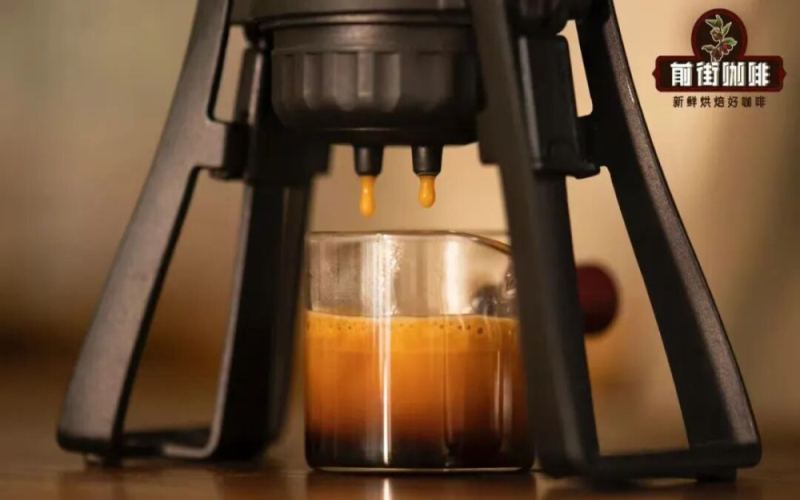
Can a manual hand-press espresso machine extract espresso with a rich crema? With this question in mind, Front Street conducted a complete unboxing and hands-on test of the Starpler third-generation hand-press espresso machine. From disassembling the structure and the principle of water-injection extraction, to adjusting parameters with 18 grams of coffee paired with 120 milliliters of hot water, and finally pressing out golden crema and making a hot latte, the playability of this small machine was verified step by step. The article retains the structural details of the Starpler hand-press coffee machine, the official pressure parameters, the recommended coffee dose and water volume, as well as bean recommendations such as Front Street Specialty Blend, Commercial Blend, Classic Blend, and Dark Cocoa Base Blend, making it a useful reference for coffee enthusiasts interested in hand-press espresso equipment and crema extraction. [more…]

The Principles of Milk Foaming and Latte Milk Frothing Techniques: A Complete Guide from Integration to Latte Art Patterns
Steaming milk is a fundamental skill that every barista must master, and the quality of the milk foam directly affects the taste of a latte and the result of latte art. Drawing on the practical experience of Front Street Coffee, this article explains in detail the physical principles of milk frothing, answers common problems such as foam that won't incorporate, separation, and surface bubbles, and explains how steam pressure and foam fineness determine incorporation. The article also compares the stability of milk foam at different temperatures, provides two frothing methods—manual and steam—summarizes five common mistakes, and finally includes a step-by-step tutorial on tulip latte art. Whether you are a beginner or a coffee enthusiast looking to refine your skills, you will find practical guidance here. [more…]

How to choose between a manual coffee grinder and an electric coffee grinder? A complete guide to buying considerations for beginners, from burr structure to budget needs.
As more and more people start brewing coffee at home, the grinder has become an indispensable piece of key equipment. Unlike a dripper or a pour-over kettle, which play only supporting roles, the quality of the grind directly influences how the flavor shows up in the cup. Yet when you open a shopping platform, grinder prices range from just over twenty yuan all the way to tens of thousands, and this huge price gap leaves many beginners unsure where to start. This article, drawing on Front Street's buying experience, will compare hand grinders and electric grinders in terms of burr structure, grind uniformity, portability, and price range, and offer specific recommendations for two scenarios—under a thousand yuan and with a generous budget—to help you find the one that truly suits you among the bewildering array of options. [more…]

Anomalies Emerge After Luckin Coffee's Scheduling System Upgrade: Peak Forecasting and Staffing Draw Attention
Luckin Coffee recently piloted a new scheduling system in cities such as Guangzhou, Shenzhen, and Chengdu. The system can predict peak hours based on store sales data and arrange minimal staffing accordingly. While the new system improves efficiency, it has also sparked discussions about the distribution of work between full-time and part-time employees, responses to unexpected situations, and labor cost control. At the same time, as Luckin's store expansion slows and sales decline, the problem of redundant staff is gradually emerging, and this system upgrade is seen as an important measure to reduce costs and increase efficiency. As coffee lovers, it is worth learning about the impact of this change on store operations and employee experience. [more…]

Analysis of Mandheling Coffee Flavor: The Classic Rich Bitterness of Sumatra, Indonesia, and the Secrets of Golden Mandheling
Indonesian Sumatra Mandheling coffee is famous for its rich, bitter profile and herbal spice flavors, standing in sharp contrast to the more acidic coffees on the market. This article begins with the history of coffee cultivation in Sumatra and the origins of the Catimor and Tim Tim varieties, then explains in detail how the wet-hulling process shapes Mandheling's deep, muted herbal and pine notes, and takes an in-depth look at the screening standards and trademark story behind PWN Golden Mandheling. Drawing on cupping and pour-over practice, Front Street Coffee shares resting recommendations, brewing parameters, and flavor performance for medium-dark roasted Mandheling, guiding you through the unique charm of this classic bitter coffee. [more…]

Luckin's collaboration stickers with Zootopia 2 hide a twist—users manually swapping outfits may be behind copyright considerations
Luckin Coffee has teamed up with Disney's Zootopia 2 for a collaboration, launching limited-edition drinks, themed packaging, and merchandise, sparking a buying frenzy among fans. However, the themed stickers in the second wave of merchandise hide a clever design—what appears to be an abrupt black triangle pattern is actually a peel-off Luckin apron sticker. Users can place it over the movie characters to complete a "costume change." This design not only circumvents Disney's strict restrictions on brand logos but also achieves promotional goals through user interaction, jokingly dubbed by netizens as "a perfect combination of copyright awareness and creativity." Front Street Coffee has also taken note of the marketing ingenuity behind this collaboration and will break down the details and fun aspects of this partnership for you. [more…]
Bialetti Moka Pot Practical Manual: Step-by-Step Breakdown, Bean Selection Philosophy, and Full Analysis of Extraction Details
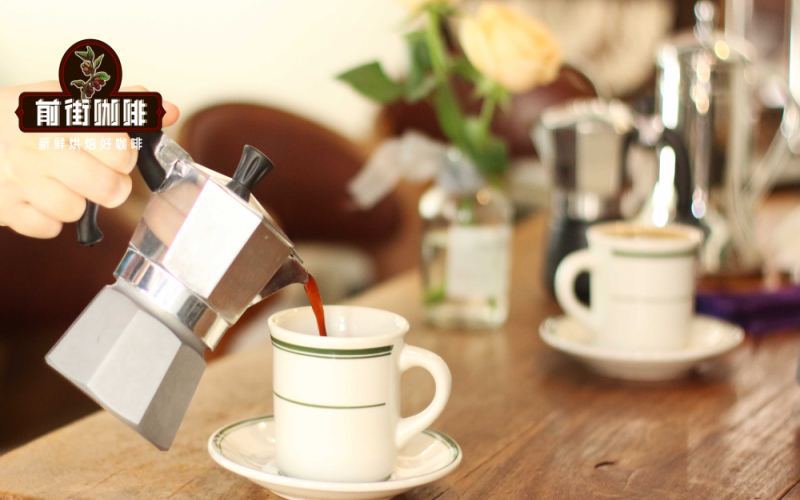
The moka pot may seem easy to use, but if you want to consistently brew a rich, delicious cup of coffee, every step matters—from adding water and filling the grounds to controlling the heat. This article uses the Bialetti moka pot as an example, first outlining the complete brewing process, then explaining key aspects one by one, including coffee bean selection, grounds quantity control, extraction time, water volume, and heat adjustment. The article also combines two products—Front Street Coffee Classic Espresso Blend and Front Street Coffee Dark Cocoa Espresso Blend—to offer bean selection advice suitable for the moka pot, helping coffee lovers make full-bodied, well-balanced moka pot coffee at home. [more…]
The Essential Guide to Milk Frothing for Specialty Coffee: Milk Foaming Principles, Assessing Integration, and Optimal Temperature Explained
Milk foam is the soul of a latte and a cappuccino. In a proper latte, the milk foam should be thin and fine-textured, with a glossy surface, and go down smoothly. Drawing on Front Street Coffee's hands-on experience, this article systematically sorts out the basic principles of milk steaming, answers the most common questions when steaming milk—why the foam doesn't incorporate, and why the foam floats on the surface during latte art—and gives criteria for judging the degree of incorporation. At the same time, through comparison experiments at different temperatures, the article explains what temperature is most suitable for heating milk and why the foam rapidly collapses after exceeding 70°C. Whether you are a complete beginner or an enthusiast hoping to refine your latte art skills, you will find practical reference here. [more…]
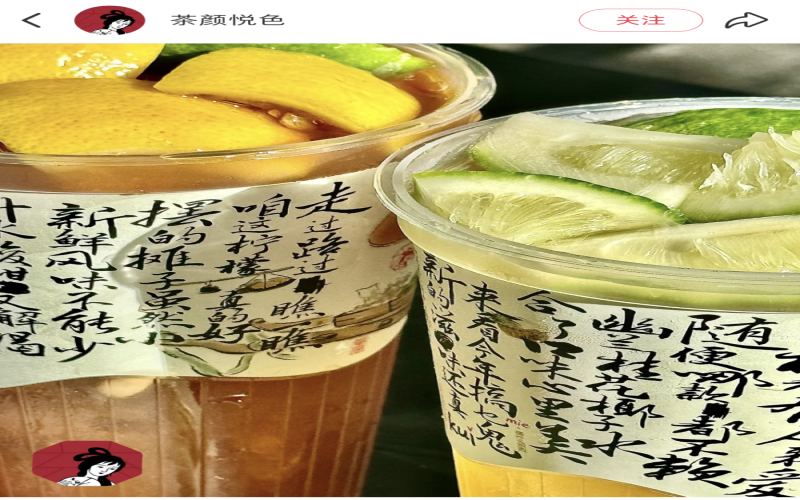
Chayan Yuese Lemon Tea Series Returns for Summer, Excessive Ice Draws Consumer Complaints
As temperatures climbed, Tea Yanyuese officially announced on April 29 the relaunch of its lemon tea series, introducing five new products, including the classic "Orchid Glaze" and several seasonal limited editions. However, Changsha was absent from this launch because its Good Lemon brand already covers the lemon tea category, disappointing longtime fans. After the new products hit the market, complaints about "too much ice" on social platforms quickly overshadowed discussions about taste. Many consumers reported that a cup of the drink was gone after just a few sips, and that after removing the ice, the portion was less than half. The official side had explained that lemon tea cannot be made with less ice or no ice because the ice is used to suppress astringency, but consumers still felt that nearly 20 yuan bought them little more than a cup of ice. This article will provide a detailed account of the incident and the reactions from all sides. [more…]

Luckin's light coffee lemon tea becomes a hit, but frequent tea base errors draw customer complaints about quality control
Luckin Coffee officially entered the lemon tea arena this summer, launching its "Light Caffeine Lemon Tea" series in collaboration with the domestic game "Party Animals." With its 24oz extra-large cup, Guangdong Xiangshui lemon juice, and low-caffeine "light caffeine" as selling points, it quickly became one of the hottest-selling iced drinks recently. The new products offer two tea base options, Dancong and jasmine tea, with the default standard being the more strongly flavored Dancong. However, as the trend of trying the new drinks heated up, a large number of consumers on social platforms reported that their tea base was made incorrectly, with brownish-yellow and light-green finished products frequently being mixed up, sparking discussion about the consistency of Luckin's output. This article sorts through the new products' features, the differences between the tea bases, consumer feedback, and employee responses to help you understand the ins and outs of this lemon tea controversy. [more…]
What Coffee Grounds Are Suitable for a French Press? Detailed Explanation of Hot vs. Cold Brew Differences and Brewing Parameters
The French Press was invented in France in the 19th century, and thanks to its simple structure and easy operation, it remains a daily choice for many coffee lovers today. It uses immersion extraction, requiring only three steps to brew: add grounds, pour water, and press the plunger. But to consistently produce a good cup of coffee, the coffee-to-water ratio, grind size, water temperature, and steeping time all need to be carefully controlled. Drawing on extensive brewing experience, Front Street Coffee offers coffee bean recommendations and parameter suggestions suited to the French Press, and extends this into a complete method for making iced coffee with a French Press. In addition, the French Press can also serve as a cupping tool, a tea-making vessel, or even a milk frother, and there are finer points to cleaning and disassembling it. [more…]

Those ridiculous negative reviews of coffee shops that leave baristas with no choice but to silently endure them
In the coffee industry, customer reviews are an important yardstick for measuring a store's service quality, and also a key link between consumers and coffee shops. Whenever a bad review appears, staff members tend to collectively panic, replay the incident over and over in their minds, and reflect deeply. However, there are always some bad reviews that leave people both exasperated and amused—from complaints that the shop door is too heavy, to grievances about not being called "princess," to getting fired for being late to a meeting because the coffee was too good. Apart from these absurd reviews, quite a few bad reviews stem from customers' unfamiliarity with a product's taste, and chain brand stores often have no authority to adjust recipes on their own, so these reviews unrelated to the product end up adding extra burden on staff. To cope with this situation, coffee shop workers each have their own tricks. [more…]